

Case study · Traceability
Traceability System for an Auto Component Manufacturer
A confidential auto component manufacturer supplying automotive customers replaced paper-based records with end-to-end batch and process traceability — so complaint or recall-related trace-back can be supported using searchable genealogy records.
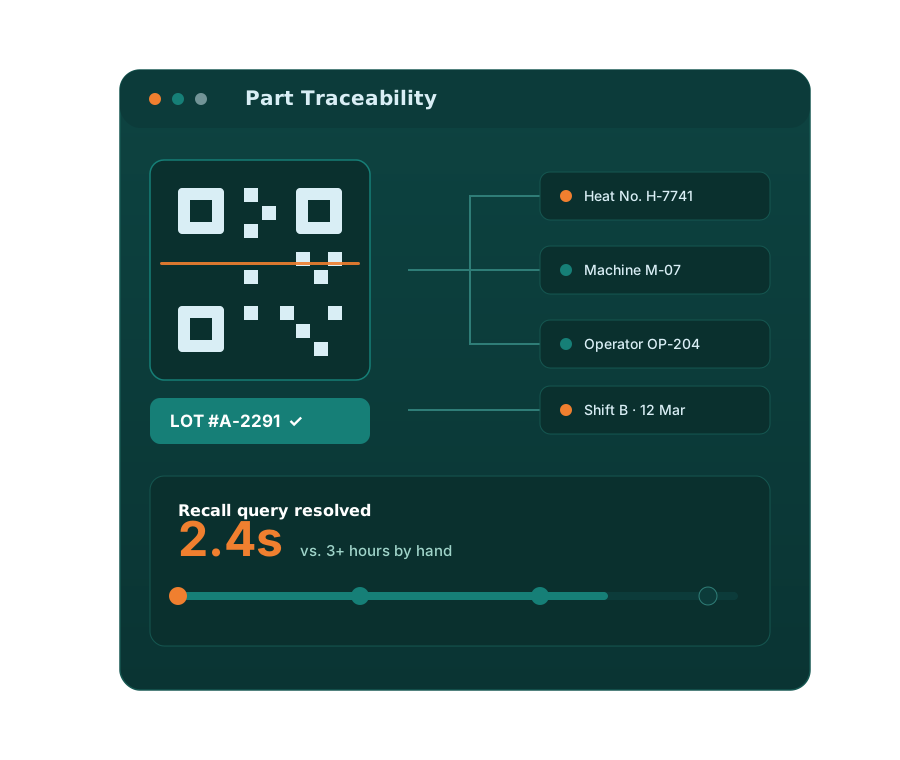
The business challenge
Genealogy lived on paper — and trace-back was slow
The manufacturer's automotive customers expected forward and backward traceability based on captured process data for every part. In practice, batch and process records were captured by hand across separate registers, and identities were easily lost between operations.
When a customer complaint arrived, the team had to manually piece together which material lot, machine, operator and shift were involved — a slow, stressful process that also made audits and recall scoping harder than they needed to be.
Operational impact — before Edhaas
What the team lived with day to day
Manual trace-back
Complaints triggered hours of searching through paper registers.
Broken genealogy
Batch and heat identities were lost between operations.
Audit pressure
Records had to be recreated by hand before customer and IATF audits.
Over-wide recalls
Without precise genealogy, more stock was quarantined than necessary.
What Edhaas built
A traceability system shaped to their process
Edhaas engineered the system around the manufacturer's part marking, routings and customer requirements — not a fixed template.
Unique part & batch identity
Barcode / QR identity applied and carried through every operation.
Forward & backward genealogy
From raw material lot to finished part and back, in both directions.
Material & supplier linkage
Incoming lots tied to the parts they were consumed into.
Machine, operator & shift capture
Every stage recorded who and what produced the part.
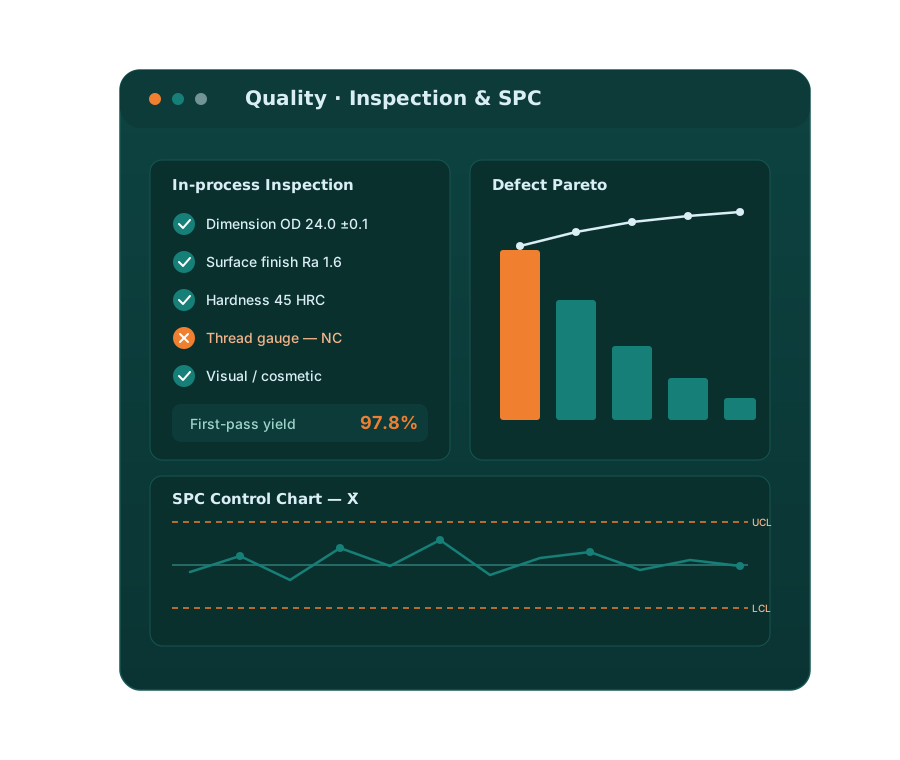
Inspection & rejection linkage
Quality results and rework attached to the exact part.
On-demand traceability reports
Structured genealogy reports generated when needed for customer or audit documentation support.
Workflow covered
The chain we made traceable end to end
- 1Part Identification
- 2Production Process
- 3Quality Inspection
- 4Rework / Rejection
- 5Finished Goods
- 6Dispatch
- 7Traceability Report
Key features
What the system does
Barcode / QR marking
Consistent identity across every stage and store.
Genealogy search
Search captured genealogy records forward or backward from a single screen.
Lot-wise quarantine
Help identify potentially affected lots based on captured genealogy data.
Audit report export
Generate genealogy and inspection records on demand.
Role-based access
Controlled access with a full audit trail.
Tally / ERP friendly
Designed to integrate with existing systems.
Business outcomes
What changed after go-live
Outcomes are described qualitatively. Specific figures are kept confidential at the client's request.
Near-instant trace-back
Complaint and recall queries answered from a single search instead of manual digging.
Documentation support by design
Genealogy and inspection records available on demand.
Better information for recall-scope assessment
Affected lots identified precisely, reducing unnecessary quarantine.
Better supporting records for customer discussions
Trace-back backed by verifiable production history.
Inside the system
What the software looks like
Representative interfaces from this type of build. Actual client screens are confidential.
Related solutions
Software behind this case study
Questions
About this traceability project
Want traceability records that are easier to search and review?
Tell us how your parts are identified and where genealogy breaks today — we'll show you a system built around it.